Tuesday, July 27, 2010

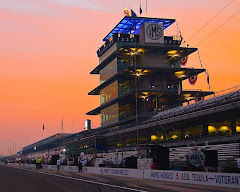
Time to Kill the Brickyard 400?


Those who have followed the ebb and flow of my writing here know that I have frequently held up NASCAR as a successful U.S. motorsports business with which IndyCar should compete in the marketplace.

In my view, that assertion is becoming questionable. Yes, IndyCar would still love to have NASCAR's problems - in particular, its television audience. However, my purpose here is to offer an opinion on a different but related subject.

The Brickyard 400 should die.

I believe those IMS officials who say that 140,000 paying customers, roughly 54% of capacity at the IMS, are sufficient to make the event profitable. The television money alone might be sufficient to ensure profitability.

However, it bears noting that the audience is dwindling with each passing year.

Blame whatever you like – NASCAR’s general decline, relatively poor viewing angles, Goodyear, the COT. The fact is that the event is waning rapidly. The Brickyard 400 is contributing to the erosion of the Indianapolis Motor Speedway brand.

I suspect that NASCAR has over saturated the market for auto racing in the United States. If I am correct, then the House of France is dealing with a very large problem that it might not be able to solve. Its shared interests with the International Speedway Corporation and the threat of lawsuits from its other promoters likely render NASCAR unable to decrease its “inventory” of racing product, at least with regards to the Cup Series.

NASCAR’s problem need not be the Indianapolis Motor Speedway’s problem. After all, the IMS is certainly not immune to the problem of over saturation. Eliminating the Brickyard 400 would enable the IMS to reduce the “supply” of dates that are available for fans to witness racing at the track. This, according to simple economic theory, would likely increase attendance for those dates – in May – that remain. This would be good for the IMS and for IndyCar racing.

The good news is that the Indianapolis 500 is still very special. We know this because, in spite of everything, its rate of decline is minuscule compare with that of both the Brickyard 400 and the United States Grand Prix.

If NASCAR sponsors want to participate at Indianapolis, then let them become IndyCar sponsors.

Roggespierre

Monday, July 26, 2010

IndyCar Notes

Hello, all. It's been awhile.

I have a few things to say.

1. Could it be that the NASCAR model is fundamentally broken? The decline in attendance is becoming embarrassing. The television ratings are still very good when compared with historical standards for motorsports in the United States. Nevertheless, they're falling, too.

2. I am disheartened by reports that John Lewis has resigned. He has a terrific reputation both inside and outside of racing. He shall be missed.

3. Some might find it somewhat surprising that I have been silent regarding the Dallara-and-Clothes announcement. My reasoning is that we need more information before we can make any judgments about the program. There is one exception, of course. Given the market value of operating an Izod IndyCar Series team, we can say with certainty that the new Dallara costs too much.

Roggespierre

Wednesday, July 7, 2010

IndyCar: See the Future!


I go back and forth on the "innovation" question as it pertains to IndyCar racing. Yes, innovation was a great selling point for racing for nearly a century. However, as the author of this story in Slate writes, innovation in those days had everything to do with top-end speed.
That is not the case today.
Again, I point you in the direction of the column in Slate in which Edison2 is discussed.
Former racers Ron Mathis, Kevin Doran, and Brad Jaeger (Indy Lights) are managers for this very ambitious company located in Lynchburg, Virginia.
The Edison2 also provides a nice tie-in with IndyCar because it runs on E85 Ethanol. According to the company, the 750-pound Edison2 has demonstrated that it can get 101 mpg. That won't help APEX Brasil and UNICA sell ethanol, but it might just give IndyCar racing something interesting to promote.
Might we some day see the 5-gallon Indianapolis 500?
Roggespierre

Tuesday, July 6, 2010


I present the following whopper of a quote from the Indianapolis Business Journal's Anthony Schoettle.


For many years, the series has operated under the false notion that the
teams are the most important component of the series. Don't get me
wrong. The teams are important, but they're not the singular element that
will make this series go.

Schoettle is correct, in my opinion. Teams supply a very important portion of the IndyCar product. They are not, however, the whole product. They aren't even close.


For example, no one in his or her right mind would claim that the Penske, Ganassi and Andretti teams are not far superior to those that participated full-time in the Indy Racing League prior to 2002.


Nevertheless, the facts indicate that interest in IndyCar racing has actually decreased since the Big 3 showed up. We know this because we have seen the crowds dwindle at multiple venues. We also have television ratings- the Indy 500, other network races, and cable events - that tell the same story.


Teams that show up with largely unknown financiers posing as drivers are not doing IndyCar any favors. Furthermore, the few IndyCar drivers who were actually hired by their teams aren't exactly easy for Randy Bernard & Company to sell.


The time has come to quit treating those teams with deference.


Roggespierre

Tuesday, June 29, 2010

IndyCar Future: the macro view

The gentleman pictured above is Herbert Hoover, the 31st President of the United States. Fairly or not, his is the face of Great Depression.

You might be asking yourself what President Hoover has to do with IndyCar racing?

If a growing number of economists and hedge fund managers is correct, then we might just be headed toward the type of deflationary recession that prompted your grandparents to hide cash under the mattress and to wear the same overcoat for 50 years.


Keynesians and Austrians are beginning to agree that the risk of a global economic depression has never been greater. For those who are not familiar with economic schools, I shall say only that these two typically agree on exactly nothing.

If the economists are correct - and I note that they frequently are not - then what should IndyCar do in order to prepare? I have indicated my preference for low cost leadership positioning in the U.S. motorsports marketplace. Others have thoughtfully disagreed.

If the bottom really is falling out of the global economy, then what is IndyCar's best course of action?

I look forward to reading your thoughts.

Roggespierre

Another reason to cut IndyCar Costs

In the past, I have worked hard to explain here why increasing television ratings should be jobs one, two and three for IndyCar management.

Simply stated, there is no other metric that can be leveraged in so many different ways to increase revenue to the league, its promoter-customers, and its suppliers of racing teams.

Reaching this conclusion is easy. However, accomplishing the objective is extremely difficult.

I invite you to read this fascinating Ad Age story about the value of prime time television ratings.

What might we be able to extrapolate from the article with regards to IndyCar racing sponsorship value? Is this good news or bad news?

I invite you to answer the question before I provide quantitative analysis.

Roggespierre

Monday, June 28, 2010

Dario does his part at New Hampshire


That Dario Franchitti is an outstanding IndyCar driver is obvious. He is a two-time Indianapolis 500 winner and the defending series champion. His accomplishments speak for themselves.

Therefore, it would seem to follow that Franchitti should be a huge racing star in the United States. However, attendance and television ratings appear to indicate that he is not.

Like most IndyCar drivers, Franchitti is not from the United States. He must therefore work that much harder to establish himself as a competitive product in the U.S. motorsports marketplace.

In that regard, Franchitti has had a very good summer. He seems to have made appearances just about everywhere since May, when he won his second Indy 500.

Franchitti's latest promotional effort was Sunday at New Hampshire Motor Speedway, where he drove three laps in his Target Ganassi Indy car to promote the series' return to NHMS in 2011. Witnessing a fast race car on the New Hampshire oval no doubt shocked many of the NASCAR Cup partisans.

Personally, I look forward to seeing IndyCar's return to NHMS. I am rooting for Jerry Gappens and Randy Bernard to pull off a highly successful event.

They will need lots of help from IndyCar's "stars". Dario Franchitti appears to be working hard to become exactly that.

Let's hope that Dario becomes the most widely known Scot in the United States since Adam Smith.

Kudos to you, Dario. Don't stop now. Come down here and mingle with the Citizens. Get to a county fair or two this summer. Try the pork tenderloin.

You've only just begun!

Roggespierre

Friday, June 25, 2010

Yankee Go Home: USF1 Banned... Forever!


The United States takes great pride in being the Land of Opportunity. Despite growing cynicism, we remain a nation of dreamers.

The Old World harbors a less romanticized disposition.

The USF1 dream died a humiliatingly public death today at the hand of the World Motorsports Council. Apparently, these guys don't take kindly to vaporware.

If IndyCar were to operate in this manner, then we would see heads rolling across Gasoline Alley as a matter of course. This is the series, after all, in which talented and accomplished foreign ride buyers, let alone American dreamers, are unable to land a seat.

Roggespierre

Thursday, June 24, 2010

IndyCar's Bernard talks Sense


Take a look at the new Associated Press interview with IndyCar Supremo Randy Bernard from the Sports Illustrated website.


The good news is that the chief executive continues to say things that make a lot of sense. The bad news, of course, is that the devil is embedded in details that remain to be seen.


We must keep our television numbers up... Sponsors buy off television... I
think the television number determines the future of the sport. - Randy
Bernard

This is a direct hit. Nothing can create revenue-generating leverage like good television ratings. That Bernard recognizes that poor TV ratings are much more than an unfortunate inconvenience is very good news for IndyCar fans.

Dan Ochs, manager of programming and acquisitions at ESPN, then chimes in with this gem.


We need to determine what's causing viewership to fall off. - Dan
Ochs


The Indy 500 has established historic statistical lows in consecutive years for the following:


  1. Television Rating
  2. American Drivers

Might there be a causal relationship?

Anyway, let's return to Bernard.


We haven't changed the product, and until we change the product, we have to
be very realistic on this. - Randy Bernard


Mr. Bernard shall get no argument from me. IndyCar has never seriously attempted to manage its product. If it were to do so in a strategically advantageous way, then it might just be able to become a viable competitor in the marketplace.

That, of course, is where those devilish details enter the picture. The product is much more than chassis and engines. The IndyCar "whole product" includes drivers, racing circuits, television broadcasts, and more. A new spec in and of itself could represent nothing more than added cost.

Much more important are those things that the new specs might allow IndyCar to do. Appealing to the present group of true believers will not be sufficient.

I thank Mr. Bernard for providing encouragement and wish him well as he attempts to deduce specific solutions.

Roggespierre

Wednesday, June 23, 2010

Can IndyCar Sell at New Hampshire?


It is no secret that the IZOD IndyCar Series will announce this weekend that it will return to New Hampshire Motor Speedway in 2011.

There are elements of this move that I like very much. NHMS promoter Jerry Gappens hails from the Rust Belt town where I completed my undergraduate studies, the same town that produced John Paul, Jr. Gappens is passionate about IndyCar racing. He has wanted a race date for more than a year.

I also respect Gappens for having been openly critical of the notion of IndyCar staging a race in the parking lot at Gillette Stadium in Foxborough, Massachusetts.

But Can It Work?

I will admit that I attended the IRL race at what was then New Hampshire International Speedway in 1997. I was joined in the grandstands by approximately a dozen of my closest friends.

The race was fantastic. It was won by the handsome young man to the left, Robbie Buhl, who edged former F1 driver Vincenzo Sospiri at the finish line. The win was undoubtedly sweet for Buhl, a former CART Indy Lights champion whose reward had been a part-time ride in Dale Coyne's s#*$box. He then stood on the sidelines while guys like Andre Ribeiro and Carlos Guerrero landed quality rides in CART. Sound familiar, J.R. Hildebrand?

So, yes, Buhl's win was warmly received. Unfortunately, there were virtually no fans there to receive it.

Incidentally, if you do go to the NHMS race next year, allow me to recommend that you include a quick jaunt to Portsmouth, New Hampshire while you're there. It has a great, authentic New England atmosphere without the great, authentic East Coast prices.

A NASCAR Track

Fans who supported CART during the split will no doubt recall that their favorite series drew fine crowds at New Hampshire. Unfortunately, The Split was not all that happened in the 1990s. There was also the unprecedented mainstream rise of a series called NASCAR Cup. NHMS was expanded to make room for all of those NASCAR fans.

One could argue that today's IndyCar Series is effectively a poor imitation of CART, one that features slower, less interesting spec cars and a whole lot less money from tobacco companies and arbitraged supply chains. Can this product draw a respectable crowd at a facility that has added capacity to accommodate NASCAR Cup?

And let's not forget that racing is a tough sell in New England.

Having seen the market breakdown for the 2009 Indianapolis 500 television ratings, I can tell you that the three local markets that had the lowest ratings were Boston, Providence and New York. Yes, there are racing fans in New England, but they tend to like NASCAR, Mods, and Supers. Will they want to watch an international road racing product at New Hampshire Motor Speedway?

As much as I want to see IndyCar succeed at oval tracks, I have serious reservations about this.

If Jerry Gappens can sell this bunch in New England, then he's one helluva race promoter. I wish him good luck and fear that he'll need it.

Roggespierre

Monday, June 21, 2010

IndyCar notes from the back of a hotel Napkin


Vacation is a wonderful thing. If you ever have an opportunity to visit Coronado, California, then I strongly suggest that you do it. What a great place!

Scribbles

I am pleased to let you know that the Mario Andretti Honda commercial ran on the local ABC affiliate in San Diego immediately following the Los Angeles Lakers' Game 7 win over the Boston Celtics in the NBA Finals.

Pressdog reports that attendance at Iowa fell this year. Losing 5,000 paying customers is never good news, but is particularly troubling when that amount is equal to more than a 14% year-over-year decrease. The erosion of IndyCar's oval fan base continues unabated, it seems. IndyCar can't blame ISC and its unbundled NASCAR Cup tickets for this one.

That said, a crowd of 35,000 - that's 105,000 in 3-day attendance parlance - at Toronto would likely be hailed as a huge success.

Cranking the Mill

From the rumor mill, I am hearing that Randy Bernard is now consistently turning to Robin Miller for advice. If this is true, then I think it is a troubling turn of events. Bernard is supposed to be a marketing genius, after all.

Full Disclosure - I like Robin Miller very much. He is candid, smart and very entertaining. He has always treated me well personally. Nevertheless, I have vehemently disagreed with Robin regarding certain subjects at various points in time. Regardless, I have never doubted that he genuinely believes in everything that he writes. He also happens to care about the Indianapolis 500 and IndyCar racing more than many of the sport's participants.

That said, Robin is representative of no one but himself. He is not a marketer. He is a nostalgic fan and quasi-insider who, like many of us, yearns for the good old days. The problem is that those who long for a return to glory tend to disagree about the causes and effects of the growth and the subsequent decline of IndyCar racing. Therefore, Robin is no more an authority than any other fan.

Roggespierre

Thursday, June 10, 2010

Texas IndyCar Price & Market Value


Thanks to multiple contributors who brought the latest IndyCar television ratings data to my attention.


You know who you are.


According to Sports Media Watch, the Firestone 550K on Versus attracted 518,000 viewers. The same race in 2009 drew 467,000 viewers. Any increase is good news for the series. Adding 11% year over year is solid.


These numbers give us an opportunity to value the returns to IndyCar team sponsors that are attributable to participation in the Texas race.


Math!


We begin with our quantifiable benchmark, namely the value of sponsoring a full-time championship caliber NASCAR Cup car in 2010. As we have said, published reports and our own revisions indicate that such a team could anticipate generating approximately $18.649 million per year in sponsorship revenue.


We assume that the primary driver of sponsorship value is television ratings. Supply chain derivatives and arbitraging activities that have nothing to do with the value of the racing product are excluded from our analysis. Subsidies that are paid to teams by drivers and the league are also excluded.


The 36 NASCAR Cup events in 2009 combined to attract approximately 236,720,000 TV viewers in the United States.


$18,649,062 / 236,720,000 viewers = $0.078781098838767


Therefore, the sponsors of a typical championship caliber NASCAR Cup team pay a bit less than $0.08 per U.S. television viewer. Therefore, that number (not rounded) is the market price that sponsors can be expected to pay.


Firestone 550K: the Valuation


I remind you that the IndyCar race at Texas attracted 518,000 U.S. television viewers.


Thus, the valuation equation:


518,000 viewers * $0.078781098838767 = $40,808.61


The Texas race was worth $40,809 in advertising value to sponsors such as Penske, GoDaddy.com and Target.


Return to the Benchmark


So, how did NASCAR Cup compare? Let's take a look.


Sports Media Watch notes that the Gillette Fusion ProGlide 500 at Pocono drew its worst rating since 2007. However, it still managed to draw 5.3 million U.S. television viewers on TNT.


5,300,000 viewers * $0.078781098838767 = $417,540


Therefore, the NASCAR Cup race at Pocono was worth $417,540 in promotional value to sponsors of the top teams.


The Meaning of Market Competition


Notice that the value that accrues to sponsors can be quantified. Econometrics are far more sophisticated than anything that I have noted here, but the point is the same.


This is why I am very concerned about returning to the CART model. Yes, CART event promoters did very well. Temporary circuits tend to be very good for promoters.


However, CART was fortunate that it did not have an established market competitor that was worth nearly 10x its value every time it put a product on the track.


In addition, tobacco companies that provided ample funding to CART and many of its teams and drivers are now gone. Those firms did not care about ratings - they advertised in CART because it was the only way that they could promote their products on television.


Those funding sources are gone forever.


Sponsorship of a top team in the Texas IndyCar race is now worth approximately 9.77% of sponsorship of a top team in the NASCAR Pocono race. Even if IndyCar were to quadruple its rating, its teams would still need to sell sponsorship at a price that is more than 60% cheaper than the price of NASCAR team sponsorship in order to be competitive in the marketplace.


Roggespierre

Wednesday, June 9, 2010

Oh, no! Boring Belle Isle might be coming Back!


Detroit's Belle Isle is IndyCar racing's Rasputin. There are many reasons to hate it. Unfortunately, it is virtually impossible to kill it.


According to Paddock Talk, the annual parade through Belle Isle could return to the IndyCar schedule in 2011. Roger Penske would be the promoter once again.


Meanwhile, Indy 500 Champion Dario Franchitti is lobbying to have an IndyCar race through New York's Central Park. That might actually be pretty cool.


Nevertheless, for better or worse, the parade toward a primarily road and street racing series remains unabated.


Roggespierre

Monday, June 7, 2010

NASCAR fans... just like IndyCar fans


According to Sports Media Watch, NASCAR just concluded its worst-rated season on FOX... again.

Read the entire story here.

Please note the comments section following the SMW story.

What are NASCAR fans doing? They're blaming the television partner!

Granted, IndyCar would love to have NASCAR's problems right about now. Let's hope that Randy Bernard and ICONIC figure out a way to take advantage when NASCAR Cup sponsorship valuations are adjusted downward.

I have discussed that very proposition here.

Roggespierre

Sunday, June 6, 2010

MLS likes IndyCar Cable TV Partner


IndyCar insiders have blamed Versus for the series' poor cable television ratings. However, another niche sport in the United States apparently believes that Versus might just provide the key that will unlock future growth.

According to Broadcasting & Cable, Major League Soccer has initiated preliminary discussions that might lead to a deal with Versus. MLS is apparently impressed with the way that Versus has promoted and increased ratings for the National Hockey League. The package that is the subject of current negotiations airs presently on Fox Soccer Channel.

Major League Soccer is one of few properties that draws fewer U.S. cable viewers than IndyCar. According to Sports Media Watch, the MLS on ESPN2 drew an average of 290,000 viewers per game in 2009. This year's season-opener on ESPN2 drew 285,000 viewers, down 14% from last season.

Some sports that are very popular globally simply do not attract a large audience in the United States.

For proof, we need look no farther than the ManU/Chelsea Premier League match that attracted a whopping 526,000 viewers on ESPN2, a new Premier League record in the United States. That number is in the same ballpark with IndyCar races on Versus.

Culture Matters

In the United States, soccer is a game that is played primarily by suburban school children. In many other nations, the game is both a deep-rooted passion and a very serious business.

Similarly, road and street racing in the United States tends to be great fun for a small niche that likes that sort of thing - the exception being NASCAR Cup at Watkins Glen and Sonoma, the two most popular road races in the United States. Globally, that particular brand of racing is widely considered to be the ultimate test of man and machine.

No racing series can change an entire national culture. Apparently, neither can a professional soccer league. The difference is that racing costs much, much more than soccer. That is why it requires a much larger audience.

MLS might be profitable with an audience of approximately 300,000 U.S. TV viewers. IndyCar enjoys no such luxury.

Roggespierre

Saturday, June 5, 2010

Briscoe foils potential huge night for IndyCar


The Texas race was pretty good, in my opinion. There seemed to be solid action throughout the pack all night long. Penske and Ganassi did not finish 1st, 2nd, 3rd, 4th and 5th, which I had feared might occur.

Unfortunately for IndyCar, Ryan Briscoe won the race. I say unfortunately because, had Danica Patrick finished 1st rather than 2nd, IndyCar would have been the lead story on Sports Center and would have owned the front pages of sports sections throughout the United States.

Victories by Ryan Briscoe, a nice guy and a talented driver, are typically deemed to be irrelevant.

I suspect that this one shall be no different.

Roggespierre

Friday, June 4, 2010

Who wants to Promote Edmonton IndyCar?


Having absorbed $9.2 million in financial losses in exchange for the privilege of hosting two IndyCar races at an airport, promoter Northlands apparently wants out and the City of Edmonton is seeking to cap its future losses.

Such is the glory of temporary circuits! Congratulations, Baltimore!

Props to Honest Edmonton

That said, I do want to give credit to the City of Edmonton for its candor and transparency. I doubt that any government takes great pleasure in disclosing that it will have incurred losses of more than $10 million in public funds over three years so that it could host an IndyCar race.

If Long Beach, St. Pete, Sao Paolo, Birmingham, Toronto and Baltimore were more like Edmonton, then we would have a much better grasp of the gap that exists between the cost of IndyCar racing and demand for the product in the marketplace. Yes, city streets and Barber's permanent road course are likely more cost-effective than airports. However, in each case virtually all of the costs are variable, meaning that they must be incurred every time an event is staged.

What in fact is the difference? We'll probably never know.

Credit also goes out to Pressdog for being the first to point IndyCar fans toward this article from the Edmonton Sun.

The article strongly suggests that Northlands, the public-private partnership that promotes special events in Edmonton, wants out. Given the losses, who can blame it?

The author further suggests that the City of Edmonton is willing to continue to subsidize the event at a price point of $1 million per year. The City would like to see an "independent" promoter take over the event.

What does this mean?

It means that the Edmonton Indy will survive beyond 2010 only if a promoter agrees to accept all associated financial risk beyond $1 million per year. It also means that Northlands, the existing promoter, does not believe that it can break even despite the offer of a $1 million annual government subsidy.

That Northlands does not want to continue to promote the event speaks volumes. This is particularly disturbing when one considers that Honda will transfer to the Edmonton promoter some of the economic rent that it collects by over-charging IndyCar teams for old, spec engines. The article refers to this transfer as event "sponsorship".

This does not seem to bode well for the future of the Edmonton Indy unless a greater fool can be found.

I ask that you please keep the Edmonton equation in mind when you are tempted to blame International Speedway Corporation - a for-profit, publicly traded firm that receives no direct government subsidies, when it inevitably drops additional IndyCar races.

Roggespierre

IndyCar: Versus and National Identity

Those who have read this blog in the past know that I have no tolerance for those who blame Versus for IndyCar's cable television ratings woes.

The argument is simple. If you have a product that people want to see, then viewers will find you. Recall that it was not that long ago that a large portion of the NASCAR Cup schedule aired on The Nashville Network. The success that NASCAR enjoyed on second-tier cable demonstrated to national broadcast networks that Cup was a national sports entertainment product that was worth pursuing.

Conversely, IndyCar's poor ratings on Versus are well documented. Apologists have done what they have always done - blamed the telecaster.


A Product in Demand

Well, it seems that people indeed can find Versus if the product is something that they want to watch. I thank frequent commenter Andy Bernstein for bringing this article at Sports Media Watch to my attention.

Wednesday's Game 3 of the Stanley Cup Finals drew a 2.0 rating and 3.6 million viewers on Versus. The game between the Chicago Blackhawks and the Philadelphia Flyers was the highest rated Stanley Cup game on cable since 2002.

Some might argue that the ratings increase is due to the fact that two very popular teams happen to be playing in the Stanley Cup Finals. In my view, that argument is correct. It also supports my point concerning American drivers.

Versus is available only in the United States. Therefore, it benefits from having two popular American hockey teams playing on the sport's grandest stage. What do you think the Versus rating might have been if the Finals had included, say, the Montreal Canadiens and the Edmonton Oilers?


Facts are not always Fair

The market is telling IndyCar that the nationality of the participants matters. It provided a strong suggestion to that end in 2009, when the Indianapolis 500 had a record low eleven Americans in the field and earned its lowest rating in history on ABC. The market spoke very clearly again in 2010, when the Indianapolis 500 had nine Americans in the field, another new record low, and garnered its lowest rating in history for the second consecutive year.

The local market in Indianapolis spoke clearly on Memorial Day, when the rating for the 500 Victory Celebration dropped approximately 33% year over year. There is only one reason to watch the Victory Celebration - to listen to the drivers talk. One-third of the 2009 Victory Celebration audience determined that it was no longer interested in hearing IndyCar drivers talk.

Incidentally, a street spectacle in Baltimore will not solve this problem. In my view, each event that attracts international road racers only compounds the problem.

Argue with my opinions all you like; I welcome differing points of view. However, I do ask that you offer facts that support your conclusions.

In my view, the facts all tend to make the same statement - clearly, concisely, and loudly.

Roggespierre

Thursday, June 3, 2010

IndyCar Engines on Second Thought


Comments from some of you have led me to rethink my initial position on the IndyCar engine spec announcement for 2012.

I confess that I know very little about the technology that makes Indy cars go. Frankly, technology for its own sake does not interest me. What does interest me - and what I believe is far more important than the spec itself - is technology's impact on three crucial marketing questions.
  1. Does it enhance on-track competition?
  2. Will it significantly reduce the cost of entry to correspond with the product's market value?
  3. Does it increase the probability of adding American drivers who might be more easily sold to U.S. motorsports consumers?
Speedgeek addressed the first point quite persuasively, in my opinion.
Personally, I could see IndyCar allowing 4-cylinder engines and/or engines that come in under 2.4 liters extra boost pressure, a larger air restrictor or extra fuel flow. They kind of left that door open in the announcement... To my mind, this relatively open spec for small displacement turbo engines has been the way to go all along for the 2012 car, and to me it sounds like they're picking the route that will spark the most interest from manufacturers and fans alike.
Citizen John addressed my second and third questions. As usual, he brought relevant facts to the discussion.
Provided they are interested in participating, Mazda is one of few marques who could answer the call for 2012 with an existing product. Their 2.0L MZR-R sports car engine, now in its fourth year of service, already uses alternative fuels... without the restrictor, reaching the stated ceiling of 700 hp would not be an issue.
And my favorite part.
While the 2010 version of an MZR-R lease agreement is still being debated, it could be similar to what MAZDASPEED offered in 2008 and 2009: a three-year lease for one engine, including all electronics and ancillaries, for $60,000 the first year, $50,000 the second and $40,000 the third. With two or three engine rebuilds added in the $35K apiece range, you still walk out the door around the $150K range each year.
The prospect warms my heart.

Therefore, I shall reserve judgment as the circumstances evolve. If Speedgeek and Citizen John are correct, then it could well be that IndyCar is effectively utilizing the 2012 spec to address its ample marketing challenges.

We can hope.

Roggespierre

Wednesday, June 2, 2010

Honda wins IndyCar Engine Sweepstakes


Wow, that ICONIC committee sure did make quick work of determining the new engine formula for the IndyCar Series.

Make no mistake, today's announcement is a big nod in Honda's direction.

Honda was the only manufacturer that preferred a 6-cylinder motor for the new 2012 spec.

The stipulation that other manufacturers are allowed to compete with smaller engines is meaningless. Honda's monopoly is secure for the foreseeable future.

That Mr. Honda himself, Gentleman Gil de Ferran, was selected to speak for ICONIC only enhances the impression that the fix was in.

This does not bode well for Delta Wing, the only chassis proposal that did not assume that the engine choice would be the Honda V6.

So, when do we get the Dallara announcement?

Roggespierre