Saturday, August 15, 2009

IndyCar Arbitrage: The Emerging Strategy


Typically, if you pay $7 for something that is valued in the marketplace at $1.30, then you lose money and look pretty stupid in the process. But what if you could simultaneously sell the same product in another market for $10? Now you've made $3 risk-free and your friends think you're a genius. This is arbitrage, and it is the emerging strategy to finance the Indy Racing League and its suppliers of racing teams.


For those who are familiar with finance, we note that this is proximate, rather than pure, arbitrage. For everyone else, the technical difference does not matter.


We have established that the value generated by a championship-caliber, one-car IndyCar team over the course of a 17-race season is approximately $1.3 million. Published reports suggest that the actual price of such an effort is in the range of $7 million to $8 million. So, using these numbers we can assume that the Penske and Ganassi teams incur costs of $7 million per car each year so that they may operate racing teams that are in fact worth $1.3 million. The astute observer will argue - correctly - that Roger Penske and Chip Ganassi do not seem like men who would tolerate losing $5.7 million annually per car.


Team Penske - Abnormal Returns and Market Inefficiency

Roger Penske is not an arbitrageur with regard to his racing operation. Team Penske is financed primarily by sponsorship revenue from the Phillip Morris USA division of Altria Group, maker of Marlboro and other brands of cigarettes. Phillip Morris is subject to severe advertising restrictions enumerated in the Master Settlement Agreement between cigarette manufacturers and states attorneys general.


Unable to advertise anywhere else, Phillip Morris apparently discovered a loophole with Team Penske. The IndyCar Series therefore does not have to compete with more popular media for Phillip Morris's advertising dollars. Its relative value to Phillip Morris USA is significantly greater than it would be for any other sponsor. Penske is thus able to collect, we shall estimate here, $10 million annually per car from Phillip Morris.

Thus, the equation: Penske incurs costs of $7 million for a product that is worth $1.3 million. Then, for all intents and purposes, he sells the same product to Phillip Morris USA for $10 million. Penske can keep $3 million for himself or distribute it to loyal employees (our guess is the latter - he doesn't need the money, and there's a reason employees stay at Team Penske.)

Penske collects abnormal returns because Phillip Morris USA paid him $10 million for a product that costs him $7 million and would be worth $1.3 million to any other firm. This is not arbitrage, but rather a market inefficiency. Advertising via IndyCar racing truly is worth $10 million to Phillip Morris's Marlboro brand because its paint scheme (we don't say livery here) is iconic, and because its only other alternative is to not advertise at all.


Target Chip Ganassi Racing: Sponsorship by Arbitrage


Chip Ganassi, on the other hand, is fully engaged in arbitrage. Like Penske, he incurs costs of $7 million per car annually in order to operate a racing team that is worth $1.3 million. Chip Ganassi's sponsors do not believe that advertising via IndyCar racing is worth $7 million per car, per season. That is why the bulk of Ganassi's sponsors in fact pay for consideration that not only has nothing to do with consumer demand for IndyCar racing, but also is of far greater value than IndyCar racing in its present form could hope to be. Most of Ganassi's sponsors are, in effect, using his racing team to purchase a product in a different market altogether.


Associate sponsors such as Tom Tom, Polaroid, Vaseline and Energizer receive concessions from Target Stores in exchange for the money that finances operations at Target Chip Ganassi Racing. Retailers are prevented from receiving kick-backs in exchange for shelf space. The money that goes to Ganassi is more like a kick-aside, but we prefer to call it supply chain leverage. Having incurred costs of $7 million to produce a racing product that is worth $1.3 million, Ganassi then extracts $10 million from the supply chain leveraging activities of Target and its suppliers. Andretti Green Racing has a similar but less lucrative program in place with 7-Eleven, just as Sarah Fisher Racing does with Dollar General Stores. Newman Haas Lanigan leverages Newman's Own products to get funding from McDonald's. Except for Phillip Morris USA and Danica Patrick's backers, IndyCar teams owe virtually all of their financing to supply chain arbitrage.

Notice, however, that arbitrage is strictly a financial engineering activity. No real value has been added to the racing product. No additional fans bought tickets. Television ratings did not increase. In essence, this financial structure eliminates the need for market acceptance of the racing product. Multiply the Ganassi example many times over, and you will begin to understand why CART was unable to land a decent television package despite its armada of high-profile sponsors. That CART was exquisitely financed is undeniably true. That it was something more than a niche sport in the competitive marketplace is not. Many of CART's more lucrative "sponsorships" were generated via supply chain arbitrage. The respective companies signed on for reasons that had nothing to do with consumer demand for CART's racing product.

The Emerging Strategy

This is the path that the IRL is now following. This is the strategy. It won't make IndyCar racing competitive in the marketplace, but that is not the intent. Supply chain arbitrage is the easiest and fastest way for IRL management to generate risk-free returns that will look good to the IMS Board. Supply chain arbitrage will prevent additional heads from rolling across Gasoline Alley. Supply chain arbitrage will pacify teams that are feared by IRL management. Supply chain arbitrage will allow the participants to do the kind of racing they want to do, even if there is virtually no consumer demand for it.

Supply chain arbitrage is a scourge that could threaten the very existence of the Indianapolis 500 Mile Race.

Supply chain arbitrage robbed the Indy 500 of the Texaco Star. It felled Team Valvoline, priced Hardees' out of Indy car racing, and eliminated the Budweiser car at Indy. Supply chain arbitrage was and is faux sponsorship that enables team owners to spend beyond the value of the product they produce. The underlying assets happen to be Indy car teams and events, but they could be professional Parchesi and hot dog-eating contests, and it would not matter. It is the derivative - the leveraged supply chain - that counts.

Welcome to IndyCarbitrage**

We thought this royal scourge to be dead, but now the serpent is slithering back to the house that Carl Fisher built and Tony Hulman saved. Bonaparte's name is APEX Brasil, a behemoth that exists for one purpose: to extend Brazil's industrial supply chain in the United States. Is there any doubt that Terry Angstadt is now a double-agent, a salesman for both the IRL and APEX Brasil? His racing product has almost no value, but the teams will have his head if he doesn't give them high-tech, high-cost racing. He must construct an artifice, and the best tool in his toolkit is supply chain arbitrage, courtesy of Apex Brasil!

And, by God, it just might work. If you want an IndyCar Series that honors consumer demand, one that creates real value, then you had better hope for a severe devaluation of the dollar (likely, in time) or a flurry of hostile takeovers.

A devaluation would slay the behemoth APEX Brasil. Takeovers would handle the rest. Why? Because supply chain arbitrage has an Achilles' heel. It is laden with hidden costs! The marketing kids must be in the hospitality tent, drunk and hitting on pole-sitters, when they sign off on these stink bombs! Following hostile takeovers, the pros take charge, evaluate the contracts, and the entire artifice dissolves. Who knew that there is no such thing as a racing team that is paid for by nobody?


If allowed to reach its logical conclusion, supply chain arbitrage will turn the Indy 500 into a bad imitation of the US Grand Prix: half-filled grandstands, a minuscule television audience, drivers known to no one. But the IRL will be profitable. The teams will be sufficiently financed to do the kind of racing they like, consumers be damned.

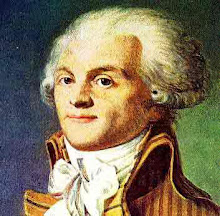
Louis lost his head, that he be replaced by Bonaparte.

And, finally, the guillotine blade shall come down, bringing a once undeniably awesome institution to its merciful end.

Show them my head - it's worth it!

Roggespierre - (closing by Georges-Jacques Danton)

**Apologies to Dr. Jack Badofsky

Friday, August 14, 2009

IndyCar Scourge - The Leveraged Supply Chain

IndyCar is hip to the streets of Baltimore. Therefore, the Republic quotes a Charm City native son as we revisit the past so that we might anticipate the future.

"Same as it ever was." - David Byrne
  • 1990 - Indy loses the Texaco Star. Texaco enters a leveraged supply-chain agreement with Kmart, increasing funding to Newman Haas Racing but robbing Indy car racing of a long-time entry. Texaco continues its primary sponsorship of Robert Yates' #28 Ford in NASCAR.

  • 1994 - Hardees' goes south. Priced out of IndyCar racing by numerous leveraged supply chain deals, the quick-serve chain reallocates all of its racing budget to NASCAR.

  • 1994 - Team Valvoline is disbanded. Two years after winning at Indy as primary sponsor for Al Unser, Jr. and Galles Racing, Valvoline enters into a leveraged supply chain agreement with Cummins Diesel and Walker Racing. Valvoline continues primary sponsorship of Jack Roush's #6 Ford in NASCAR.

  • 1995 - Budweiser dethroned. The world's top sports advertising brand abandons Indy car primary sponsorship. It strikes a leveraged supply chain deal with Kmart, increasing funding to Newman Haas Racing while subtracting another entry from the series. Budweiser continues primary sponsorship of Rick Hendrick's #25 Chevrolet in NASCAR.
The emerging strategy is one that we have seen before. The Committee on Public Safety trusts that citizens know the difference between an enterprise that is well capitalized and one that possesses a product that consumers actually want. Leveraged supply chains funnel money to racing teams and promoters. Leveraged supply chains do not create demand for the racing product.

That is why certain IndyCar participants love them.

We witness our future in our past.

Roggespierre

IRL IndyCar: To Compete or Not Compete?

We have established that the U.S. market for auto racing products that feature American drivers, low-tech cars, and almost exclusively oval tracks is far more attractive than its alternative. Managers at firms the world over routinely conduct similar analysis upon which they base strategic decisions. We'll use the U.S. market for energy drinks as an example before returning to the matter at hand.

Energy Drinks: Textbook Competition

Red Bull demonstrated that abundant demand exists among U.S. consumers for sweet, uniquely packaged, carbonated beverages that contain multiple stimulants, the names of which all apparently end with the "-ine" suffix. As any economist would have anticipated, shelves at U.S. convenience stores were subsequently inundated with similar, cheaper products from firms that hoped to capture market share from Red Bull. Brands such as Monster and Rockstar were successful.

The Case of NASCAR

Like Red Bull, NASCAR (sans-culottes!) is the dominant market leader in its industry. As such, NASCAR commands premium prices not only for itself, but also for its drivers, teams and promoters. Unlike Red Bull, NASCAR operates in an industry that is not particularly attractive to potential new competitors because entry requires substantial capital investment, as well as development of an intricate supply chain. Prospective new entrants are therefore kept out. There will be no Monster and no Rockstar to swipe market share from NASCAR.

The only existing firm possessing the resources to do that is IndyCar, a much less popular U.S. motorsports enterprise that would be insolvent if not for direct and indirect subsidies provided by the Indianapolis Motor Speedway, racing drivers, and, increasingly, governments. IndyCar could be the Monster, the Rockstar, that rips market share from the NASCAR leviathan. Based on television viewership averages, IndyCar would double the size of its TV audience if it were to capture just 6.51% of NASCAR's present market share. Better still, because IndyCar and NASCAR do not always compete head-to-head, as Red Bull and Monster do, it is entirely possible that IndyCar might increase viewership without having to take share directly from NASCAR. This need not be a zero-sum game.

How would IndyCar achieve this? It would have to begin by slashing its cost of production to the point at which IndyCar and NASCAR are of equal value. This would require that operating a championship-caliber IndyCar team for a 17-race season cost no more than $1.3 million - challenging, but entirely possible. NASCAR team valuations were certainly in that very range at one time, and those teams still managed to show up for far more than 17 races each year.

This is market discipline, something that NASCAR teams have honored and Indy car teams have worked feverishly to outrun for at least 30 years. The core problem of IndyCar racing is that many of its teams have no interest in participating if they must serve an audience and operate within their means; they wouldn't be able to do the kind of racing they like. So the ever self-entitled are now searching for new enablers.

To Be Continued

Roggespierre


IRL IndyCar Competitive Strategy

Previously, we charged that the Indy Racing League lacks a competitive market strategy. The operative word here is "competitive," for it seems that IRL management is indeed following a sort of strategy, one that is not necessarily intended to increase IndyCar's competitiveness in the marketplace.

We remind you that two very strong forces are presently driving IRL management decisions.
  1. The league (needlessly, in our view) fears the bargaining power of some of its teams.

  2. The IMS Board of Directors wants immediate revenue growth from its IRL subsidiary.

That in mind, we commence with our strategic analysis.

Market Selection: NASCAR and the United States Grand Prix

NASCAR (sans-culottes!) has demonstrated that ample consumer demand exists for a racing product that features American drivers, low-tech cars, and almost exclusively oval tracks. Conversely, observable demand for a racing product that features alternatives to these attributes is considerably less.

How do we know this?

The inaugural United States Grand Prix at Indianapolis provides a valuable data point. Formula 1 is the undisputed industry leader in the international, high-tech, road racing market segment. Pent-up demand for the F1 product in the United States could not have been greater in 2000; Formula 1 was returning to the country following a nine-year absence. Tickets were reasonably priced. The IMS publicized the event sufficiently.

Spectator turnout was the rough equivalent of a typical NASCAR Cup event, of which there are 34 annually in the United States. Furthermore, NASCAR Cup nearly doubled F1 in attendance that same year at that very facility. The lone independent variable in this equation is the racing product - cars, drivers, teams and circuit. The rational economic actor has no difficulty determining that American drivers, limited technology, and oval tracks collectively constitute the much more promising market segment. This is not a difficult judgment. The very best of the alternative market segment was demonstrated to be roughly half of the segment in which NASCAR operates.

Furthermore, it appears as if our assumption regarding pent-up demand for F1 in the U.S. was accurate, as well. The inaugural U.S. Grand Prix at Indianapolis led all F1 races in attendance. Subsequent F1 events at Indianapolis produced smaller crowds, even before the tire debacle, pent-up demand having apparently been satiated. Attendance in Year 1 was at least the equal of CART's most popular events regardless of circuit type. Indy's inaugural Grand Prix was, by any measurable result, the best result that could have been anticipated given the product and its market segment.

Notice: We ask that individuals who do not like this outcome kindly keep their tertiary arguments and personal prejudices to themselves. Much like firms that actually compete in the marketplace, we deal here in observable data prior to making judgments and strategic decisions. Thank you.

Onward to the House of France

We have confirmed that NASCAR (sans-culottes!) operates in a very attractive market. How, then, might the Indy Racing League become competitive in that market? And what does this have to do with the emerging, non-competitive IRL strategy that we discussed at the outset of this article?

These questions are critical. We shall answer them with haste.

Roggespierre

Thursday, August 13, 2009

Dismal IndyCar TV Ratings Continue

There is simply no other way to put it. If IndyCar racing hasn't already hit rock bottom, then we certainly can see it from here. Another race, another television audience of fewer than a quarter of a million viewers. Mid-Ohio was almost as bad as Kentucky. Anthony Schoettle of the Indianapolis Business Journal has the details.


Might we at least put the "teams and drivers need more exposure" argument to bed, once and for all? Versus promoted the IRL during the Tour de France more thoroughly than IndyCar racing has ever been promoted, anywhere. The spots, featuring Scott Dixon and Tony Kanaan, ran consistently during Lance Armstrong's return to the Republic.

Does anyone else see irony in the following real-life scenario? American television viewers tuned-in to a French bicycle race to see whether or not an American icon would win. Those same American television viewers have since demonstrated that they are not particularly interested in watching a Kiwi and a Brazilian race cars. Note that this is merely an observation and that the Republic is profoundly aware that markets can be unfair and ruthless.

Tough Tuberculosis!

Provided every opportunity to sample the IndyCar product, more than one half-million Lance fans declined the offer. The Tour de France and MMA have demonstrated that Versus is capable of drawing an audience of credible size. The problem is not the television partner. The problem is that the market has once again rejected the IndyCar product.


We do not blame IRL management for not wanting to believe that its present suppliers (drivers and teams) and partners (chassis and engines) are pushing the sport toward oblivion. But truth can no longer be concealed by comp tickets underwritten by Honda and Firestone.

Consumer interest in IndyCar racing was much, much greater when Scott Sharp, Greg Ray, Eddie Cheever and Billy Boat were battling under the lights at Texas Motor Speedway. If you revisit the attendance figures and TV ratings for those races, then you will have no choice but to concede the point. In spite of all the negativity that tarnished the IRL brand at that time, it nevertheless earned at least some measure of support in the consumer marketplace. We can not say the same for today's version.